Kentish Porcini
Boletus edulis
Wild foraged · Hand selected · Dried in small batches
Sevenoaks District, Kent · Autumn 2026
Foraged and prepared by Chris Ellyatt
If one of my little glass jars has found its way into your kitchen this Christmas, I’d like to show you where it came from. I gathered the porcini in the woods around Sevenoaks this autumn, dried them at home and kept the best for family and friends. If you’ve already got a pan on the hob, the chapter links will take you straight to the recipes.
The product · Recipes & preparation
The backstory · Other fungi
THE PRODUCT
Kentish Porcini
What exactly is a porcino?
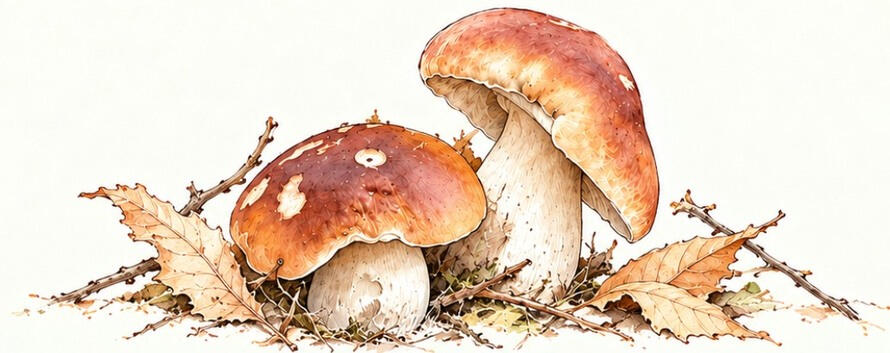
A cep, a penny bun and a porcino are three names for the same mushroom, Boletus edulis. Porcino is the Italian singular. Find two and you have porcini. The English name makes sense the moment you see the rounded brown cap with its pale rim, just the colour of a well-baked roll. Turn it over and there’s a fine sponge of pores beneath it.The fresh flesh is firm enough to cut into thick slices that brown in butter. There’s an earthy, almost nutty flavour to them. It’s easy to see why European cooks have prized ceps for so long, and why Italian cooks give them a dish as simple as ribbons of pasta. Drying changes the aroma as well as concentrating the flavour. A few slices steeped in warm water leave you with the mushrooms themselves and a brown, deeply savoury liquor that can carry a whole risotto.
What happens beneath the trees
The mushroom I take home is only the part that produces spores. Under the leaves, threads of the fungus grow around the fine living roots of trees such as oak and beech. The technical term is ectomycorrhiza. The tree supplies sugars made in its leaves. The fungus reaches through the soil beyond the root tips, helping the tree obtain water and nutrients, including nitrogen.Researchers have established that partnership on young trees experimentally. Getting those trees to produce a dependable crop of ceps is a different proposition. There’s still no routine commercial method comparable to farming button mushrooms. For a cook who wants porcini, the supply still depends largely on what fruits in the woods. For me, that’s where the interesting bit starts.
Learning to read the woodland
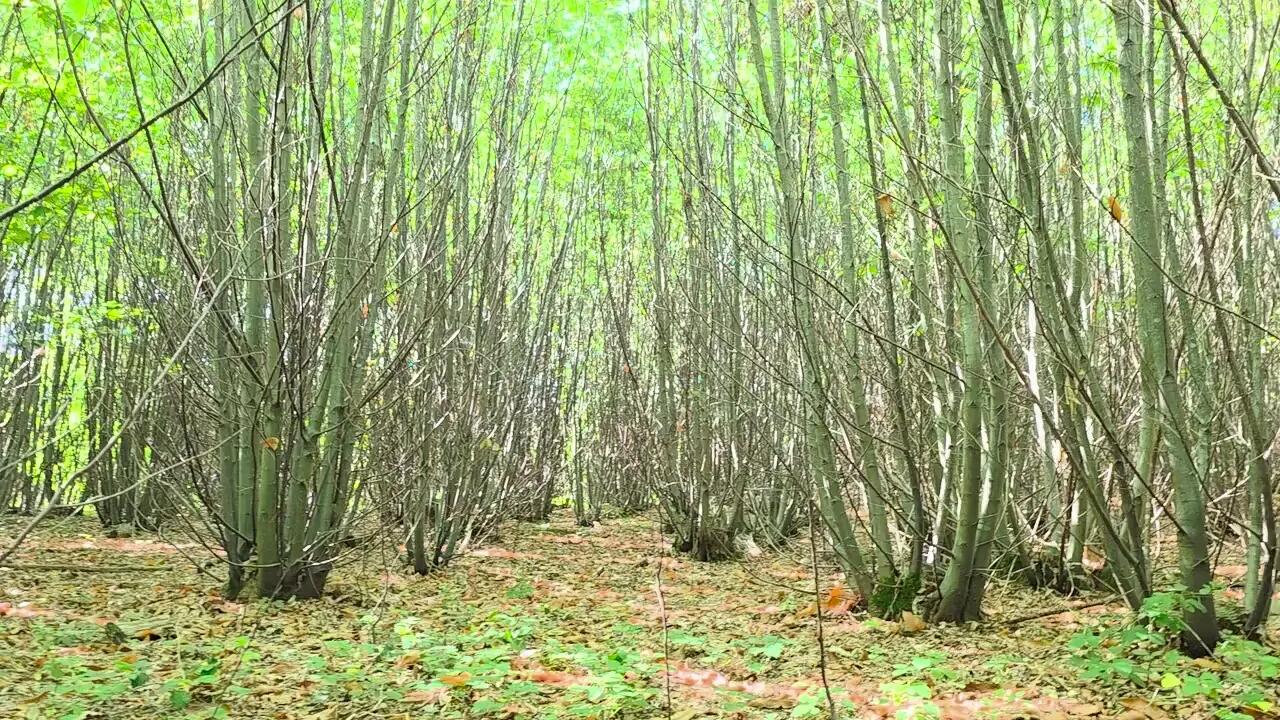
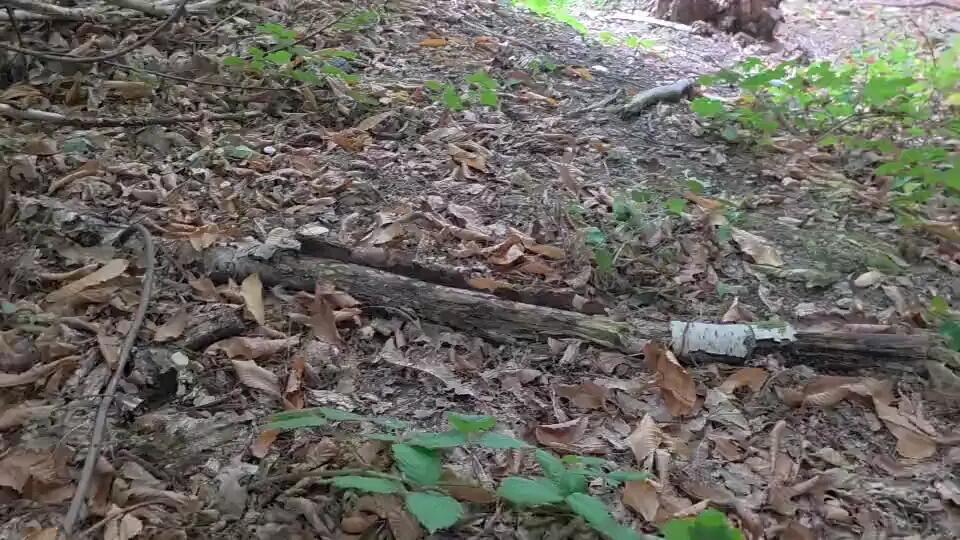
It was a dry year in Kent. The blackberries came early and sweet chestnuts were falling in August. Under beech and oak there were still pockets where the moss held moisture. Those were the places I went back to. Two stretches of the same wood can have much the same trees overhead and feel quite different underfoot. After rain I’m interested in which of them is still damp several days later.I’ve spent years walking these woods. Going back to a familiar patch gives me something to compare with last week, or last autumn. In a new wood I start again with the trees, the lie of the ground and the dampness beneath the leaves. Rainfall and temperature give me reasons to go looking. They’ve yet to give me an appointment with a mushroom.
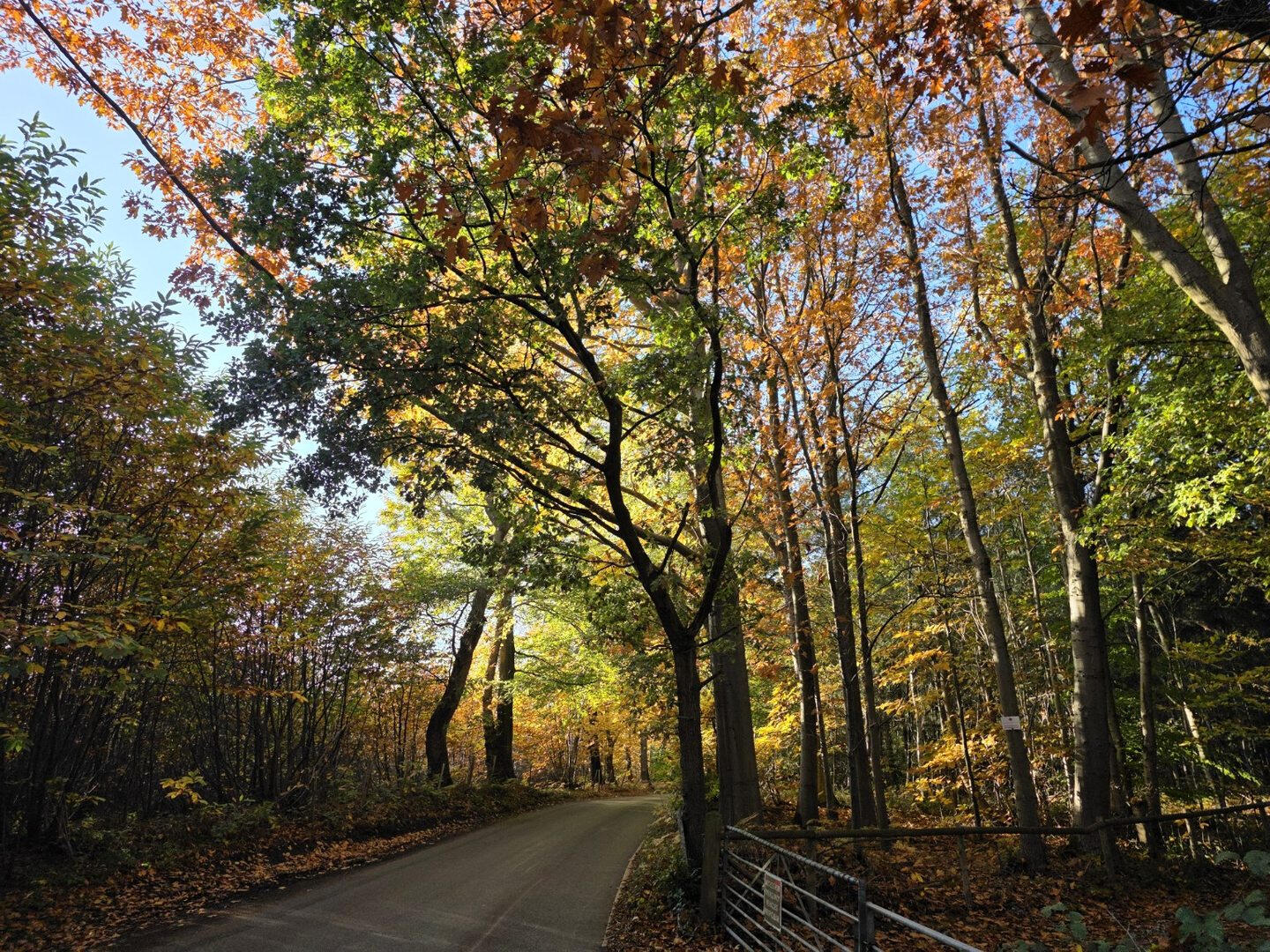
The seasons run into one another here. It takes a few visits before I realise how much the ground has changed. First come the chestnut husks, then a covering of leaves deep enough to hide a cap. Even a wood I know well has its own way of responding to a dry spell. I’m still learning which of my hunches are any good.If I want to eat a wild porcino, first I have to learn something about the life it leads. Then I have to lace my boots and go and look. Nature doesn’t make it easy. Nor should she.
A closer look
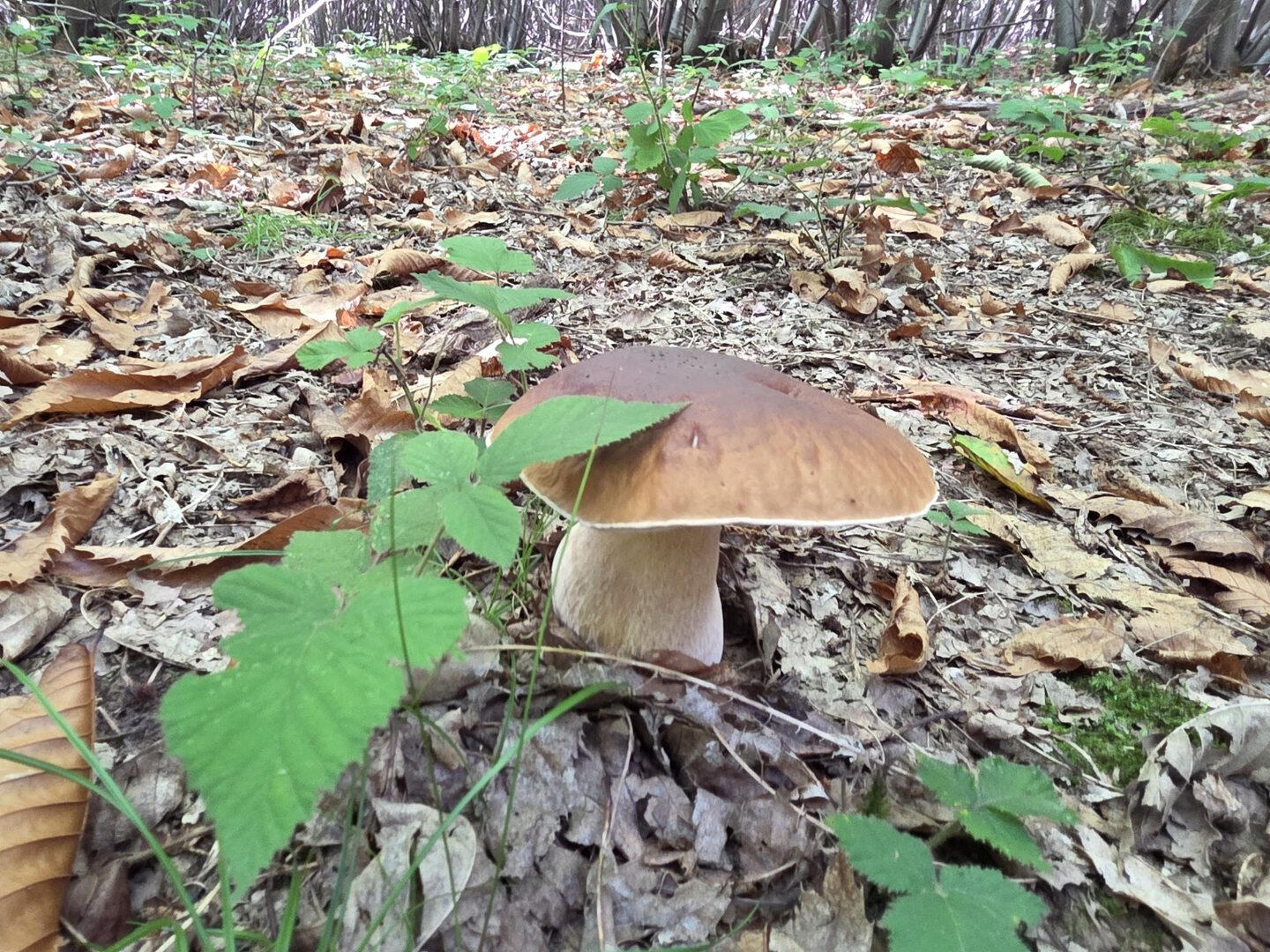
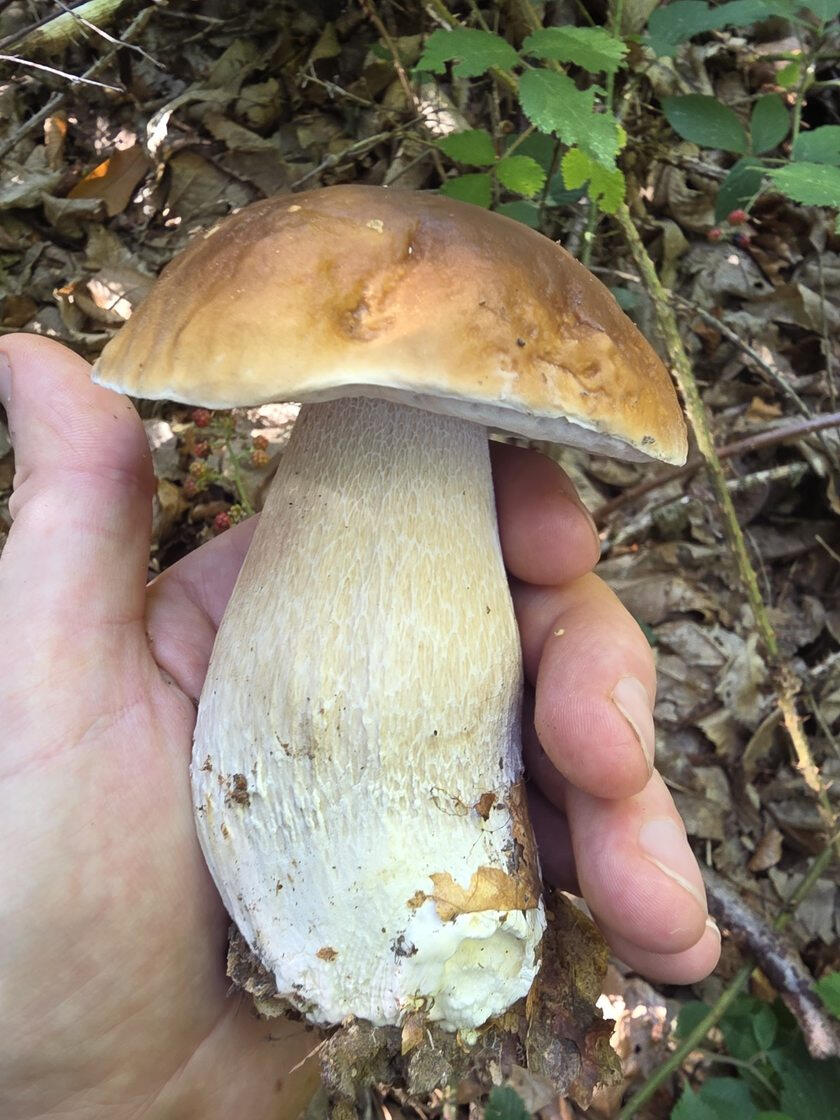
From standing height it’s the curve and colour of a cap that catch my eye. Crouching down, I can see the pores underneath and the fine pale netting, or reticulation, high on the stout stem. In young ceps the pores are pale. As they mature they turn yellowish and then olive. I take in the trees around it too. After a few seasons, you come to recognise the setting as well as the mushroom.In the film I call one “perfect looking”. I still spend time examining it. Being satisfied that it’s a cep settles one question. I still want to know what sort of condition this particular mushroom is in.
What made the cut
Every porcino in these jars passed through my hands. A handsome cap can hide a soft centre or a stem full of larval tunnels. I feel the cap, check the pore layer and look at the flesh where I cut the stem. I trim local damage generously. A soft, deteriorating specimen stays in the wood, as does the whole mushroom if I suspect the bolete mould Hypomyces chrysospermus. Most of the ceps I examined this autumn stayed where I found them.
The second inspection
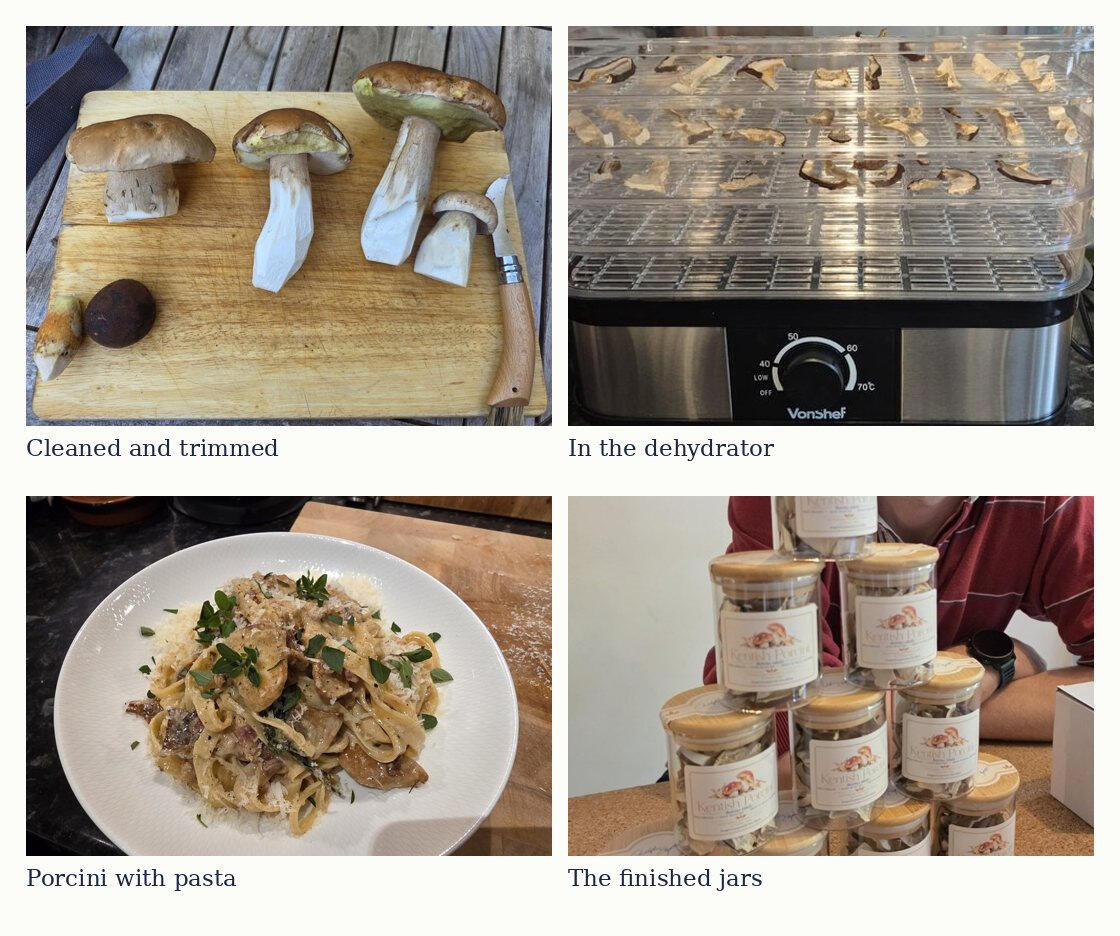
At home I cleaned away grit and leaf fragments, trimmed the stems again and cut through each cep so I could inspect the flesh. I removed the pore layer from all but the youngest, firmest specimens. Slicing opened up any damage I’d missed and gave the pieces a more even thickness for drying.Small batches often took twelve hours or more in the dehydrator. I checked every slice by hand. If it still bent, it went back in. Once the slices snapped cleanly and had cooled, I kept them in dry storage until I could fill the airtight glass jars. Each has a silica-gel sachet suitable for food packaging to absorb residual moisture. The drying does the work. The seal and sachet help keep the slices dry afterwards.Before cooking, take the sachet out and discard it. It is not edible.
The first jar
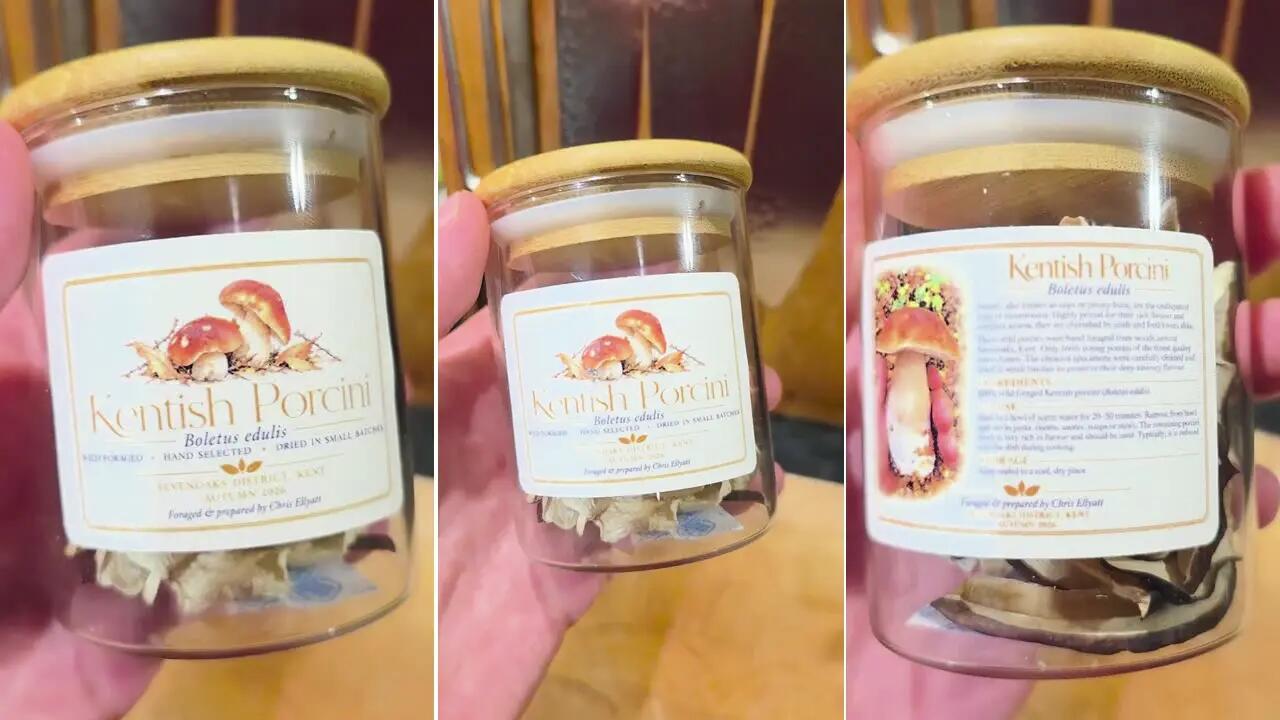
I wanted whoever opened one of these jars to see what had gone into it, right down to the signature over the lid. Here’s the first one I finished.
An autumn, captured in time
Turning that little jar in my hand, I can account for what’s inside it. Those slices came from ground that held its moisture in a dry Kentish year, under trees I’d walked past many times before. I think of the quiet hours spent looking, and the lovely big ceps I left behind once I’d cut into the stem.There was another sort of patience involved at home. I cleaned each one, laid out the slices and went back to a tray because a single piece still bent. Now someone I know is going to lift the lid, put a few slices in warm water and decide what to make for supper. That’s the bit I’ve been looking forward to.
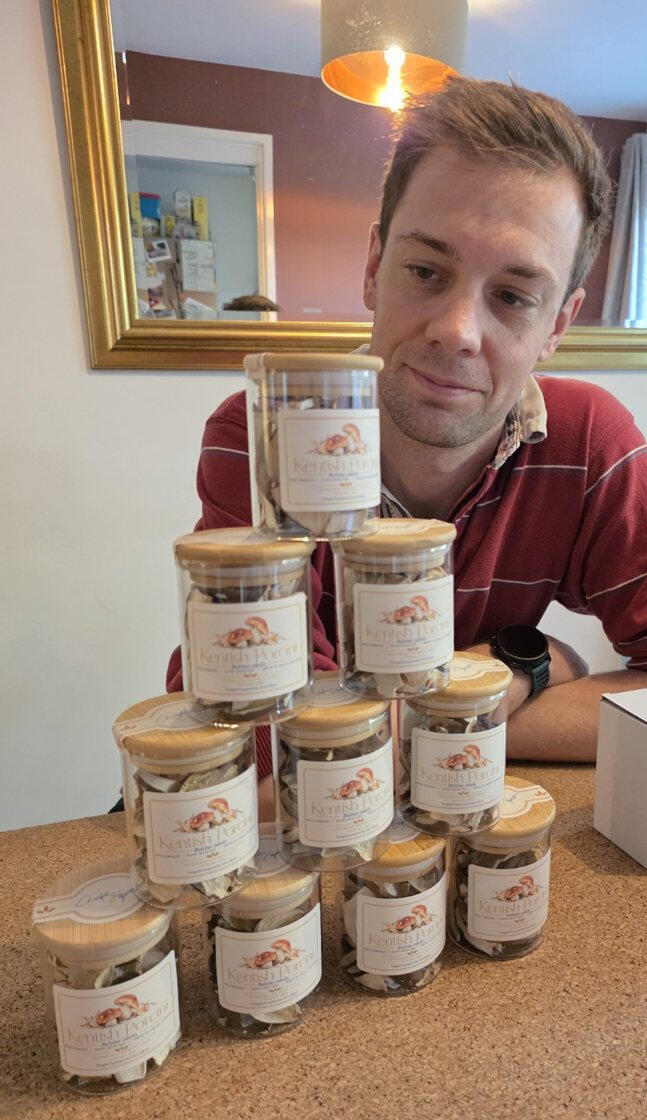
Your jar contains that autumn in Sevenoaks, captured in time.
USING YOUR KENTISH PORCINI
From the jar to the table
Tagliatelle · Wild porcini risotto
Before you start
Remove and discard the silica-gel sachet. It is not edible. Take out as many dry slices as you need and reseal the jar straight away. Keep the remaining porcini in a cool, dry, dark cupboard, away from steam.1. Soften. For a main course for two, start with 15 g dried porcini. Put them in a small bowl and cover with 250 ml warm water. Allow 20–30 minutes, or a little longer if a thick slice still has a hard centre.2. Lift. Lift the softened mushrooms out with a slotted spoon. Chop any large pieces. Leave the sediment at the bottom of the bowl.3. Strain. Pour the soaking liquor slowly through a fine sieve lined with damp kitchen paper into a jug. Leave the last gritty spoonful behind.4. Cook. Cook the mushrooms thoroughly in your dish and bring any liquor you use to a simmer. Taste the cooked dish before adding more stock or salt. Even a little of that liquor carries a great deal of flavour.
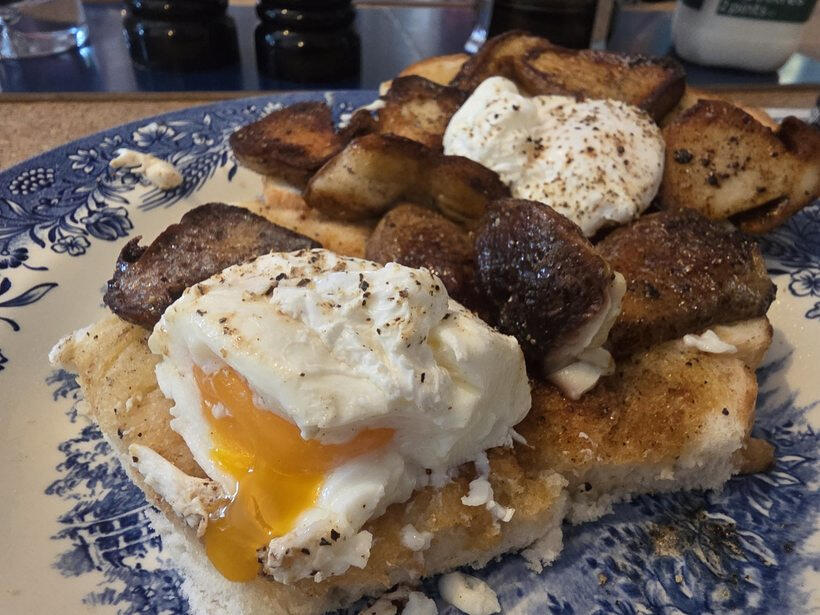
Fresh ceps, browned in butter, with toast and a poached egg. The two recipes below are suggestions for the dried porcini in your jar. For a vegetarian supper, use a vegetarian hard cheese in place of Parmesan.
Tagliatelle with porcini, butter and Parmesan
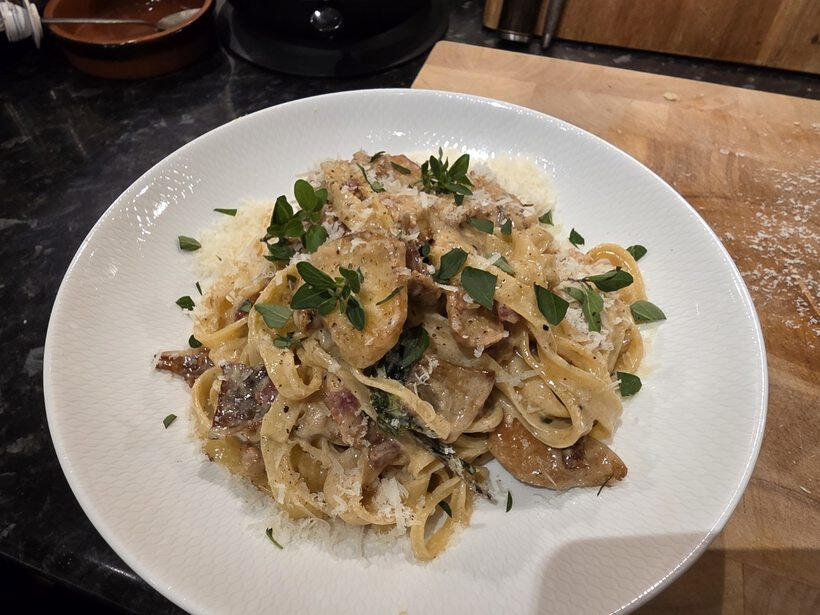
Serves 2
Prep 10 minutes, plus 20–30 minutes soaking · Cook 15–20 minutesIngredients
15 g dried porcini and 250 ml warm water for soaking
180 g dried tagliatelle
30 g unsalted butter, divided in half
1 small shallot (about 40 g), finely chopped
25 g Parmesan, finely grated
Salt for the pasta water and freshly ground black pepper to taste
1. Soak the porcini, lift them out and strain the liquor as described above. Roughly chop the mushrooms. Bring a large pan of lightly salted water to the boil.2. Melt half the butter in a wide frying pan. Soften the shallot over a gentle heat for 4 minutes. Add the chopped porcini and stir for 3 minutes. Add 150 ml strained liquor (top up with water if necessary). Simmer for 6–8 minutes, until the mushrooms are tender and the liquid has reduced to a shallow, glossy layer.3. Meanwhile cook the tagliatelle for a minute less than the packet suggests. Reserve a mug of pasta water before draining. Toss the ribbons in the mushroom pan for a minute, adding pasta water a spoonful at a time until the sauce coats them.4. Take the pan off the heat. Toss in the remaining butter and most of the Parmesan. Add black pepper, divide between two warm bowls and finish with the remaining cheese. If the ribbons stick together, one more spoonful of pasta water will loosen them.
Wild porcini risotto
Serves 2
Prep 10 minutes, plus 20–30 minutes soaking · Cook 30–35 minutesIngredients
15 g dried porcini and 250 ml warm water for soaking
About 550 ml light, low-salt vegetable stock (or enough to make 700 ml with the strained liquor)
160 g carnaroli or arborio rice
1 small onion (about 75 g), finely chopped
30 g unsalted butter, half kept cold
25 g Parmesan, finely grated
Black pepper and salt to taste
1. Soak, lift and roughly chop the porcini. Strain the liquor into a measuring jug. Add enough stock to bring the total to 700 ml. Bring to a simmer in a small saucepan and keep it hot.2. Melt 15 g butter in a heavy pan. Soften the onion for 5 minutes over a gentle heat. Add the mushrooms and cook for 3 minutes, stirring. Add the rice and stir for another minute to coat the grains.3. Add a ladleful of hot stock. Keep the rice at a gentle simmer and stir often. As each addition is almost absorbed, add another. Start tasting at 16 minutes. Allow roughly 18–22 minutes in all, until the grains are tender with a little bite. You may have stock left. If the rice needs longer, add a little hot water.4. Take off the heat. Beat in the cold butter, Parmesan and a little black pepper. Rest for a minute. Tilt the pan. The rice should move in a slow wave. Loosen with a splash of hot stock or water, taste for salt and serve straight away.
Once you’ve opened the jar
Try a smaller handful in a pot of lentils or a bean stew. Add the chopped, softened mushrooms with the stock and let the strained liquor simmer with them. In a soup, leave a few slices whole. For a sauce, chop them fine so a little mushroom finds its way into every spoonful. If you find a use I haven’t thought of, I’d love to hear what you cooked.
THE BACKSTORY
The forager and the woodland
I grew up in Kent, went to St Andrews to study biology and biochemistry, and eventually came back to live here. I investigate things for a living. On a woodland walk I get to follow a question for as long as I please, even when the only person with the slightest interest in the answer is me.I’ve always liked finding my way through unfamiliar country. Mountaineering and expeditions took me to places a long way from home. Fungi have given me the rather agreeable experience of becoming a beginner again a few miles from my own front door.
Learning the fungi
Over the past few years I’ve taken fungi more seriously. Learning a name gives me a reason to go back. Which trees was it growing under? What else fruits there later in the year? A field guide tells me which trees to look for. Another visit tells me what actually grows there.The kitchen keeps drawing me further in. A cep, a beefsteak fungus and a cauliflower fungus can all come out of a Kent wood, yet they ask quite different things of the cook. There’s a particular pleasure in being able to follow something that interests me all the way from the leaf litter to the frying pan.
The woods as a second home
Most of my walks are solitary. I find the quiet wonderfully meditative. Somewhere between listening to the leaves underfoot and stopping to look at a cap I nearly walked past, the usual clutter of the day falls away. I can become quite absorbed in a few yards of woodland and go home quite content with an empty bag and something to look up.There are places I know well enough now to notice a change I would once have walked straight past. The better I know them, the more questions I seem to come away with. I’ll pick a few mushrooms for the kitchen, leave plenty standing and take care where I put my feet. I’d like the next person along to have the same pleasure of finding something for themselves.
The people I walk with
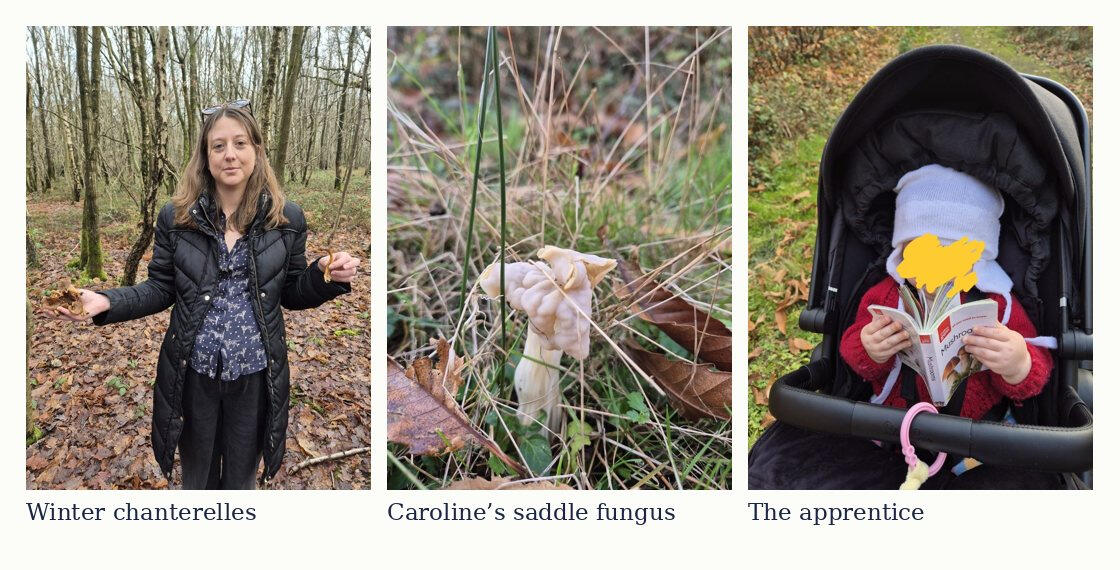
Caroline doesn’t particularly enjoy eating mushrooms. When she was eight months pregnant, she still came out with me to look for winter chanterelles. I love that photograph of her holding her winter chants up for the camera. She knew what a day like that meant to me and wanted to share it. Of all the things I get from foraging, that means the most.On another walk Caroline spotted a pale saddle fungus in the grass. Neither of us knew it. She took out our field guide and worked it out for herself. It was a Helvella, probably white saddle (H. crispa). I was a very proud husband.
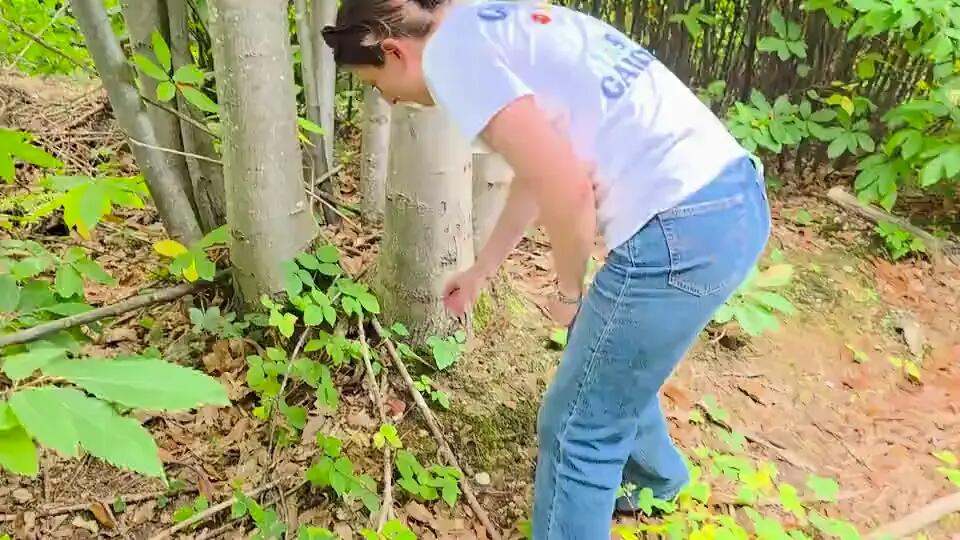
Caroline’s first porcino
Here she is finding one of her own. I’m glad we caught those few seconds when she turns round with it in her hand. She’s got a good eye for them now, even when there’s little more than the edge of a brown cap showing through the chestnut leaves.
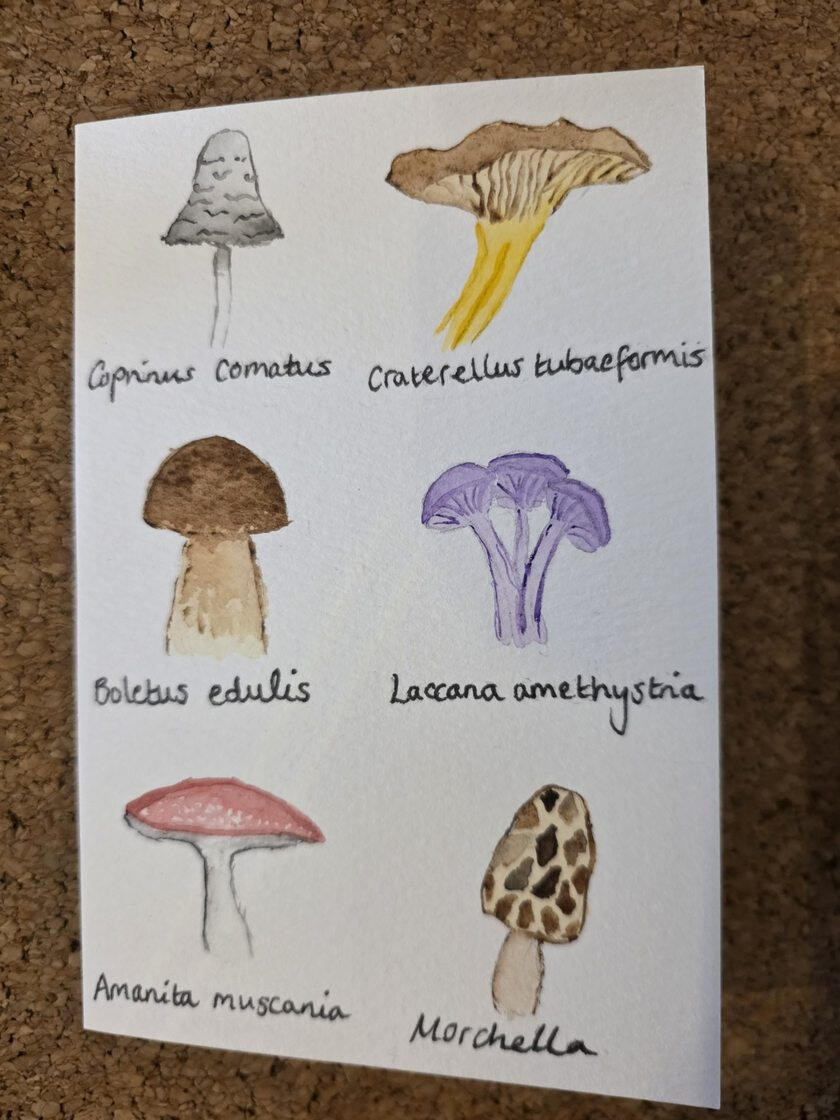
Caroline painted these mushrooms for my birthday. The winter chanterelle made it onto the card.
The apprentice
Our daughter Catherine comes along in her pushchair now. She looks up into the trees, follows the colours and takes an interest in what I bring over to show her. My favourite moment is coming back out of the trees and seeing her face light up as she spots me.The porcini get a reaction at home, too. She seems to recognise the shape by now. If I’ve brought back a particularly sturdy one, a gentle tap on the cap and a solemn “boing” are called for. This is a part of mycological training the field guides have rather neglected.
What I hope to pass on
I wonder what Catherine will notice first when she’s old enough to lead the way. It might be a mushroom. It might be something I’ve spent years walking past. I’d like her to have the chance to find out.Much of what I know began with somebody else taking the trouble to put it into a book small enough to carry in a coat pocket. I’ve had the pleasure of adding a little local knowledge of my own. If I can give Catherine some of that curiosity, and a fondness for the English countryside she grew up in, she can take it wherever she chooses.
OTHER FUNGI
Discoveries along the way
Horn of plenty · Craterellus cornucopioides
I spotted one among the sweet chestnut leaves. Then I saw another. After a while it was difficult to look anywhere without seeing one, which made me wonder how on earth I’d missed the first.
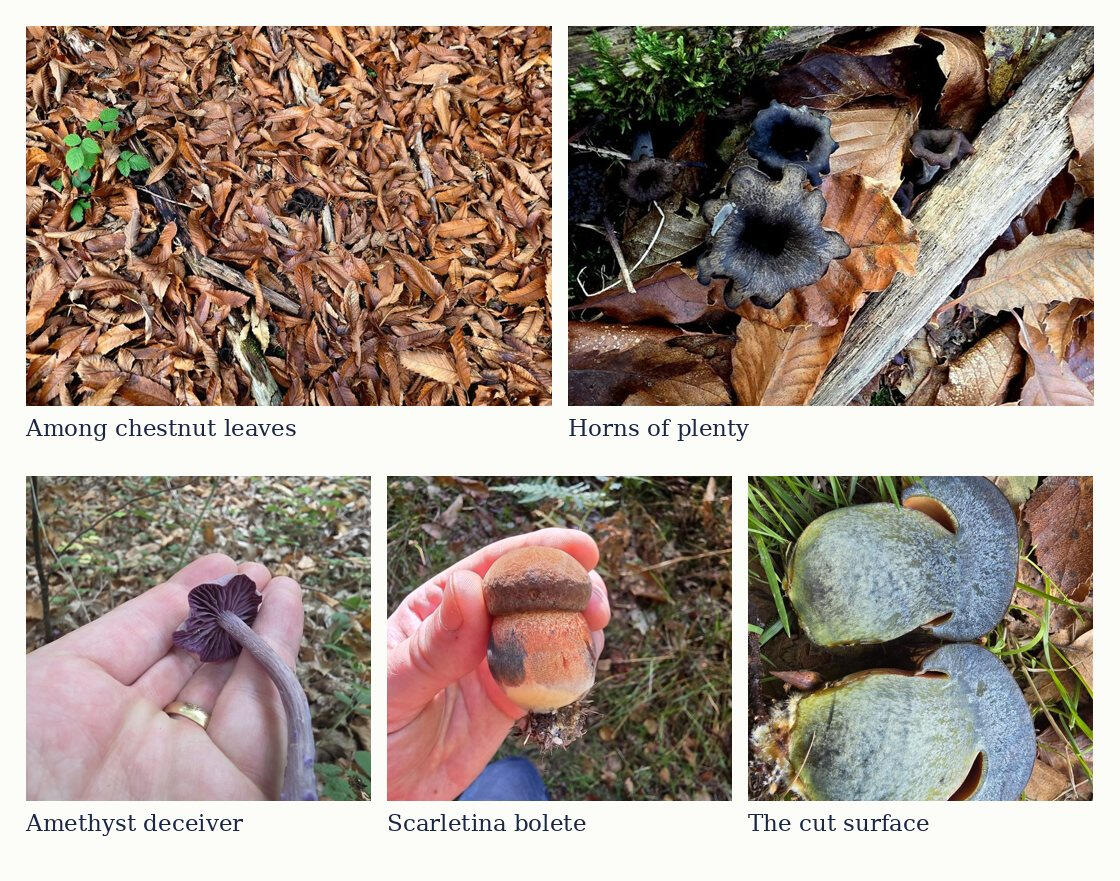
Scarletina bolete · Neoboletus luridiformis
A dark bruise on the stem, then that extraordinary blue across the cut flesh.Amethyst deceiver · Laccaria amethystina
Turn this one over and the gills are just as violet as the cap.
From the field notebook
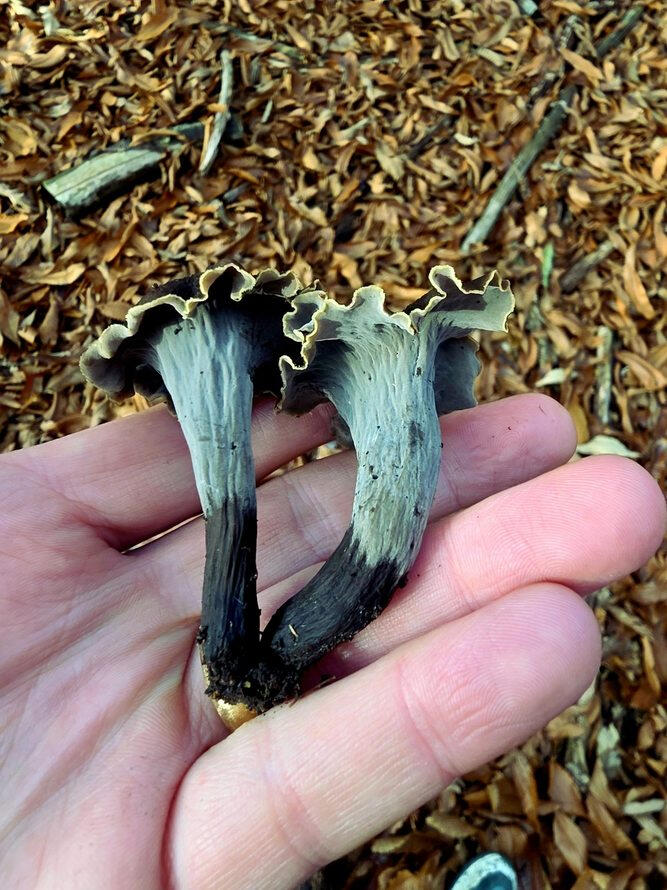
Winter chanterelle · Craterellus tubaeformis
A basketful from our winter walks.Bitter bolete · Tylopilus felleus
It’s very bitter. An unusually helpful common name.Chanterelle · Cantharellus cibarius
My first tiny summer find fitted between finger and thumb.St George’s mushroom · Calocybe gambosa
These grew in my own back garden.A possible brittlegill · Russula sp.?
The pink cap caught my eye. I’m still unsure of the identification.Fly agaric · Amanita muscaria
A scarlet cap among the brown leaves.


A different kind of noodle
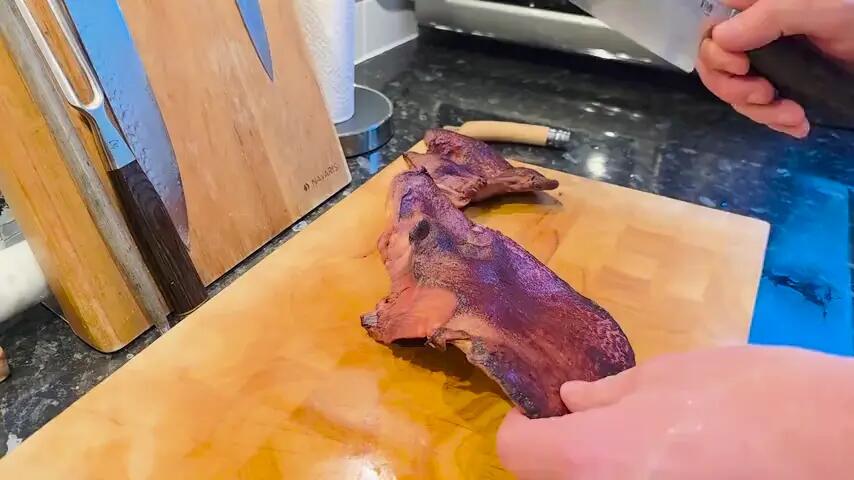
I sliced a beefsteak fungus (Fistulina hepatica) and left it overnight in a Chinese-style marinade. For the noodles I used the frills of a cauliflower fungus (Sparassis crispa). The resulting stir-fry was one of the best meals I’ve ever had. Here’s what the beefsteak looked like when I cut into it.
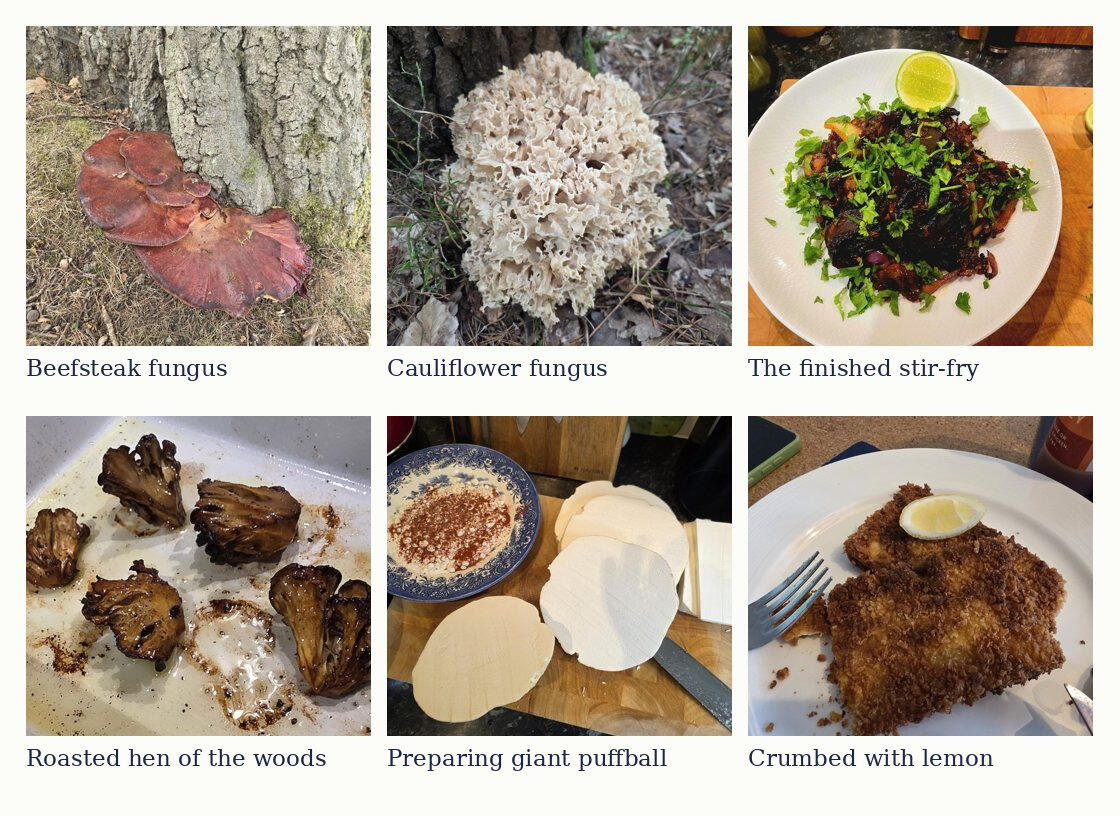
Roasted hen of the woods · Grifola frondosa
The thin, frilled edges took on the deepest colour in the roasting dish.Giant puffball · Calvatia gigantea
I cut it into broad rounds and served the crisp, breaded slices with lemon.
Come for a walk
If you’ve ever fancied looking for mushrooms but wouldn’t know where to start, come out with me one day. You can begin by spotting something interesting and asking what it might be. Some of my favourite walks have ended with an empty bag and something new to look up. If I’ve given you a jar, drop me a message or ask me next time we meet. I’d love the company.
Before you head out
Learn with an experienced forager and a good field guide. Only eat wild fungi when you’re certain of the identification. Check local picking rules, respect the woodland and leave plenty behind. Woodland Trust foraging guidanceMeet Octavius
I picked up several ticks on one woodland walk. This one earned a name. Checking for ticks is part of coming home now. NHS tick advice

Sevenoaks District, Kent · Autumn 2026
Field and kitchen references
Penny bun · Woodland Trust · Experimental porcini cultivation · Mycoscience
Tagliatelle technique · The Pasta Project · Risotto technique · Good Food